

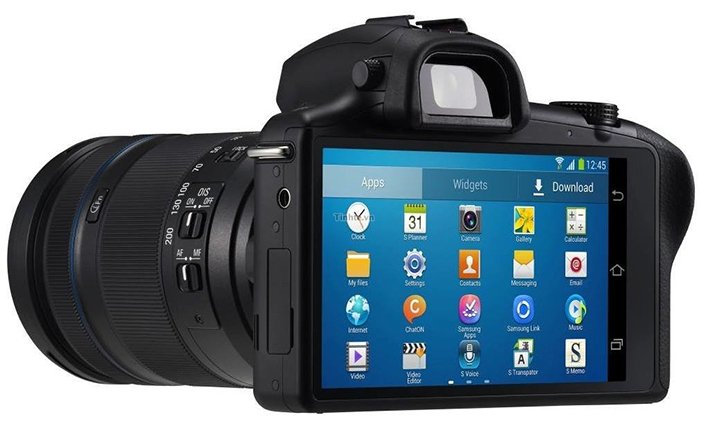
The evolution of cameras has entered an era where optics meet algorithms, and the result is nothing short of revolutionary. Gone are the days when the size of a lens or sensor alone dictated image quality. Today, computational photography — the art and science of enhancing images through artificial intelligence and advanced processing — is redefining how cameras see the world. This silent revolution is not about replacing the photographer but empowering them with tools that extend human vision itself.
The Rise of Computational Photography
Modern imaging systems, from flagship smartphones to high-end mirrorless cameras, are no longer purely optical devices. They are computational platforms that merge hardware precision with digital intelligence.
At the core of computational photography lies a simple idea: rather than relying solely on physical optics, let algorithms reconstruct and enhance what the sensor captures.
-
Multi-frame fusion: Cameras now take multiple shots in milliseconds and combine them into one perfectly exposed image.
-
AI-driven noise reduction: Machine learning models analyze patterns in pixels to eliminate noise without sacrificing detail.
-
Depth mapping and 3D reconstruction: Dual-pixel and LiDAR-based sensors enable true-to-life background separation and 3D imaging.
These innovations have created a new kind of camera — one that thinks as much as it sees.
Sensor Limitations and Algorithmic Solutions
Even the most advanced camera sensors face physical constraints: limited dynamic range, small pixel sizes, and diffraction at tiny apertures. Computational photography bridges these gaps with software ingenuity.
For instance, HDR (High Dynamic Range) imaging no longer depends solely on multiple exposures. Neural networks now simulate the human eye’s ability to perceive both bright skies and shadowed streets simultaneously. Similarly, super-resolution algorithms synthesize detail beyond the sensor’s native resolution by analyzing patterns across multiple frames.
Such systems are particularly impactful in astrophotography, low-light imaging, and macro photography, where the margin between brilliance and blur is razor-thin.
The Mirrorless Transformation and the Role of Data
Mirrorless cameras have redefined professional photography not just through compact design but through computational muscle. Advanced processors, like Canon’s DIGIC X or Sony’s BIONZ XR, execute trillions of calculations per second — managing autofocus, image stabilization, and scene recognition in real-time.
The data harvested from sensors — color temperature, motion vectors, facial recognition points — feeds machine learning models that continually refine performance. As a result, photographers can now track subjects with AI-based eye detection, anticipate motion, and achieve cinematic precision even in chaotic scenes.
What’s emerging is a data-driven camera ecosystem, where every shutter press becomes part of an evolving intelligence.
AI-Powered Autofocus: The Invisible Assistant
Autofocus used to rely purely on contrast detection or phase differences. Today, it’s driven by deep neural networks trained on millions of visual patterns.
Modern systems can:
-
Detect and lock onto specific eyes, faces, or even animals with astonishing accuracy.
-
Predict motion trajectories to maintain perfect focus during bursts or video capture.
-
Recognize objects — from cars to birds — and adjust exposure or shutter speed accordingly.
This convergence of AI and imaging transforms cameras into anticipatory devices rather than reactive ones, enabling faster, more intuitive shooting experiences.
The Shift from Optics to Intelligence
While lens craftsmanship remains irreplaceable, computational design is beginning to complement — and sometimes surpass — traditional optical limitations. Consider synthetic bokeh, which uses depth maps to replicate the soft blur of wide-aperture lenses. Or light field reconstruction, which allows post-capture refocusing and 3D rendering.
Moreover, computational color grading now mimics cinematic tones through machine learning models trained on film aesthetics. The ability to adjust lighting, tone curves, and highlights dynamically gives photographers and filmmakers unprecedented creative flexibility.
The true artistry now lies in blending sensor data, optical design, and algorithmic control into a seamless visual experience.
The Era of Neural Imaging Pipelines
The future of camera image processing lies in end-to-end neural pipelines — systems where AI doesn’t just enhance the final image but participates in every stage of capture.
From demosaicing (interpreting raw sensor data) to white balance correction and tone mapping, each phase is now optimized through deep learning. Companies like Sony, Apple, and Leica are already integrating neural engines directly into their image processors, creating “intelligent sensors” capable of learning in real-time.
This approach eliminates traditional trade-offs between speed, quality, and dynamic range, making every frame a product of both physics and computation.
Computational Cinematography: Redefining Motion Capture
The transformation isn’t limited to still photography. In cinema, computational cinematography enables filmmakers to push creative limits with less equipment and more flexibility.
Features such as:
-
Real-time background replacement without green screens.
-
Dynamic range blending to maintain cinematic tone in diverse lighting.
-
AI-based stabilization that replicates the smoothness of mechanical gimbals.
High-end cinema cameras like the ARRI Alexa 35 and RED V-Raptor are beginning to integrate computational modules that assist with exposure balancing, motion prediction, and automated color matching.
The result is a new filmmaking language — one defined not by hardware bulk, but by algorithmic finesse.
Ethics and Authenticity in a Computational Era
As photography becomes more algorithmically enhanced, the line between reality and representation blurs. This raises crucial questions about authenticity, manipulation, and trust in visual media.
Is an AI-enhanced image still a photograph, or does it become digital art? How should professionals disclose computational edits in journalism or documentary work?
Leading manufacturers are addressing this through authenticity verification systems, embedding metadata that tracks every stage of image processing. The goal is to ensure transparency while embracing innovation — balancing artistry with integrity.
The Next Frontier: Bio-Computational Cameras
Looking ahead, research in bio-inspired sensors and neuromorphic imaging is shaping the next generation of cameras. These systems mimic the human retina, processing visual information at the sensor level rather than after capture.
-
Event-based sensors detect motion as asynchronous data points, capturing only changes in a scene rather than entire frames.
-
Quantum dot sensors promise unprecedented color accuracy and low-light performance.
-
AI-integrated optics could one day self-adjust curvature or focal length, adapting like a biological eye.
Such innovations hint at a future where cameras evolve from passive tools into adaptive visual organisms, capable of perceiving the world with human-like intelligence.
Why Computational Photography Matters
The fusion of optics and computation doesn’t just make photography more accessible — it redefines creative possibility. From capturing unseen cosmic light to reconstructing memories in vivid detail, computational cameras are expanding the boundaries of human expression.
In this new era, the photographer’s craft lies in mastering not just light, but also data. The most powerful lens, after all, may be the algorithm itself.
FAQ
Q1. How is computational photography different from traditional digital enhancement?
Traditional editing modifies captured images post-process, while computational photography integrates enhancement during capture, merging hardware data and algorithms in real time.
Q2. Can AI in cameras replace human creativity?
No — AI augments human creativity by handling technical complexities, allowing photographers to focus on composition and storytelling.
Q3. Are professional cameras adopting smartphone-style computational features?
Yes. Flagship mirrorless models now include AI autofocus, subject recognition, and in-camera HDR blending derived from smartphone innovations.
Q4. What are the drawbacks of computational photography?
Potential issues include over-processing, loss of natural texture, and ethical debates over authenticity, especially in journalism and documentary photography.
Q5. Will computational imaging reduce the need for large lenses?
While software can simulate optical effects, high-quality glass remains essential for light gathering and depth accuracy — algorithms can complement but not entirely replace optics.
Q6. How do neural imaging pipelines improve color science?
They use deep learning to map color responses more accurately than traditional lookup tables, producing lifelike hues even under complex lighting.
Q7. What industries will benefit most from future camera intelligence?
Fields like autonomous vehicles, medical imaging, security, and filmmaking will see massive gains from adaptive, AI-powered camera systems.
